
The Cropwalker - Volume 9 Issue 12

By Jonathan Zettler CPA, CMA, CCA-ON and Patrick Lynch CCA-ON
ALWAYS READ AND FOLLOW LABEL DIRECTIONS
CONFIDENTIAL NOT FOR PUBLICATION
Send us your questions
If you have a question, just reply to this email, we try to have an answer for you within 48 hrs. Or text Jonathan at 519 323 7505 or Patrick at 519 275 1058. If you want a topic researched let us know.
Unable to see pictures? Move this email to your inbox or ask your email app to download them. Usually at the top of the email in a header.
Crop Conditions
Stay Positive I spoke with one grower last week. He was very down about all the bad news on the radio. I told him “Turn the radio off. Especially the news. Listen to music or some positive things this spring” This is not my first rodeo. I have been through this before. It is very important to have a positive attitude during planting season. You have to focus on doing a good job. If someone is telling you about all the bad things don’t listen. Just tell them you have to go. Then start focusing on all the good things. Your family, your friends, you live in a great country. And all the other good things in your life. And when you see someone else down this spring try to make them happy.
Weather – wet last week and continued wet for at least another week. Not much field activity last week. Snow on Monday across a lot of Ontario. Field conditions are wet and it looks like it will stay that way for the next 10 days. Winter Wheat so far, other than about 300 acres in western Ontario that Crop Insurance has released most wheat is in good conditions. Projected acreage is just over 1.0 M acres. Corn acres may be down if wet conditions continue and growers switch to soybeans. It is not anticipated that there will be much acreage changed. Soybeans some talk of poorer quality seed for varieties in earlier maturities, less than RM 1.0. Some seed may be Certified # 2 which means germination is down. Check your tags to make appropriate seeding changes.
Things to do This Week
1. Similar to other years things may dry up quickly. Prioritize what needs to be done and what would be nice to get done.
2. Plan your N on wheat. Probably forget your 2-pass system unless logistics dictate it.
3. Make a manure plan. If it is too wet to plant, it is too wet to spread manure. Plan where you can apply manure later, even if it is before soybeans.
4. Review settings and calibrate forage seeding and spring grain seeding equipment so that when time is right you can just go.
5. If you haven’t done this already, make a list of corn hybrids and soybean varieties suggested planting rate. Double check how much seed you had ordered. Yes, we said this before, but did you do this already? If your seed hasn’t arrived, check your list so it is one less thing you have to do. If something got subbed out, update your seeding rate list.
Fertilizer shortages (PJL)
I was on a conference meeting where this was discussed. Some points
1. Ontario will not run out of fertilizer. May be some logistics if the season is fast and furious.
2. Talk to your retailer and make sure they know what you need.
3. You cannot expect to go to a new retailer and ask for prices. They will probably not supply you since they are covered for their normal customers
4. UAN not purchased will be more expensive per pound of N than urea. Consider increasing your urea use. If for corn, you may need to apply an additive.
5. With higher N prices use the N calculator to determine best rate. Rate of N moves with N price and corn price.
6. Quit listening to US podcasts where there will be fertilizer shortages.
Cereals
Q I am doing a split application of N on wheat. What percentage should I be doing?
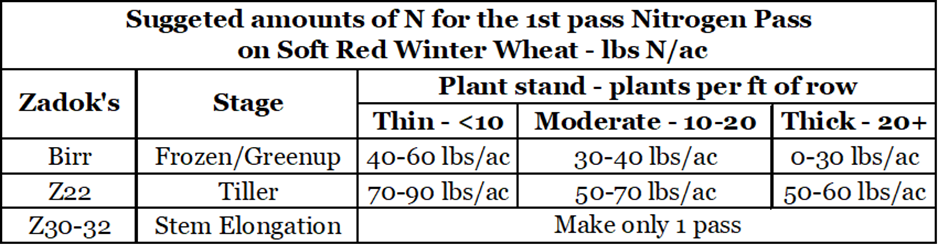
A (PJL) - The exact percentage is agronomically insignificant as to whether you do 30 lbs. of N now or 70 lbs. Logistics, product choice and sulphur(S) are more important. I want sulphur on now. Wheat needs sulphur early in its life. The soil is too cold to release sulphur now. If you have bought urea and UAN and the urea is lower priced per pound of N, you consider putting more N on as urea. If you are having it custom applied and they are trying to get a lot of acres done and if you apply a bit less and they can get to you, then apply a lower amount. If you are doing variable rate N on your second application the rate of N on your first trip is not a factor.
A (JZ) –With the higher N rates on big crops, you may need to consider splitting to manage for lodging/leaf diseases (powdery mildew loves high N rates) and equipment capacity. I aim minimum of ¾ of my sulphur on in the first pass of nitrogen. The earlier in the season you are applying the lower the rate of N you could apply -i.e. likely the lowest rate would be 30-40 units of N, with the highest rate being about 60% of the total N required i.e. 80 lbs/ac of N.
Manganese deficiency in wheat (PJL)
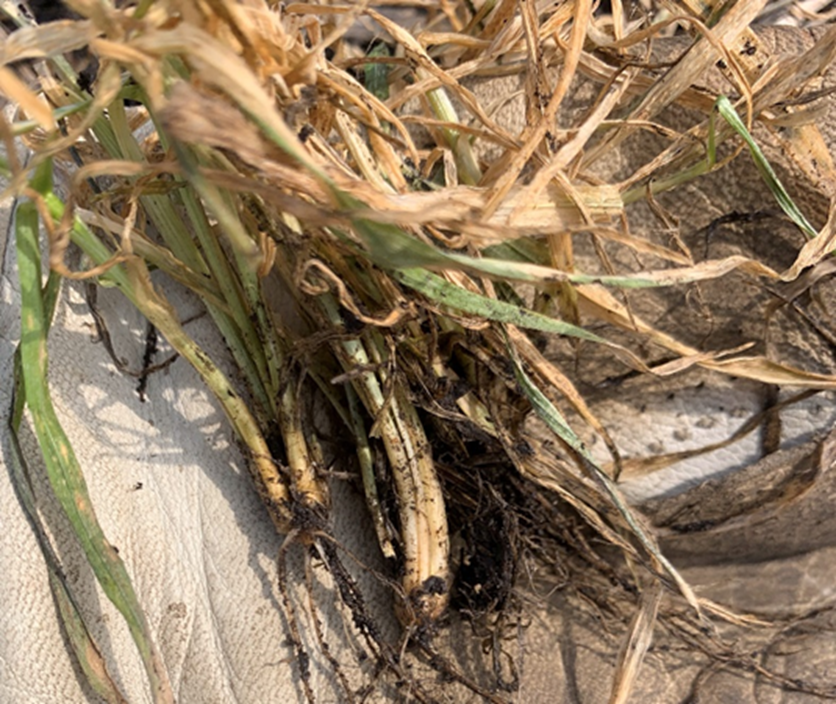
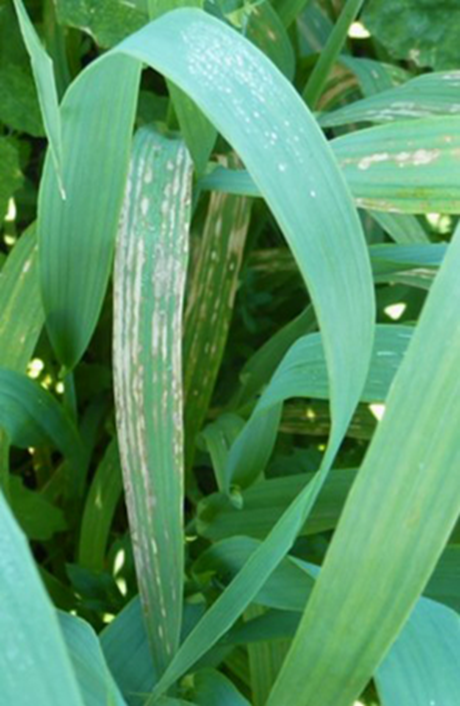
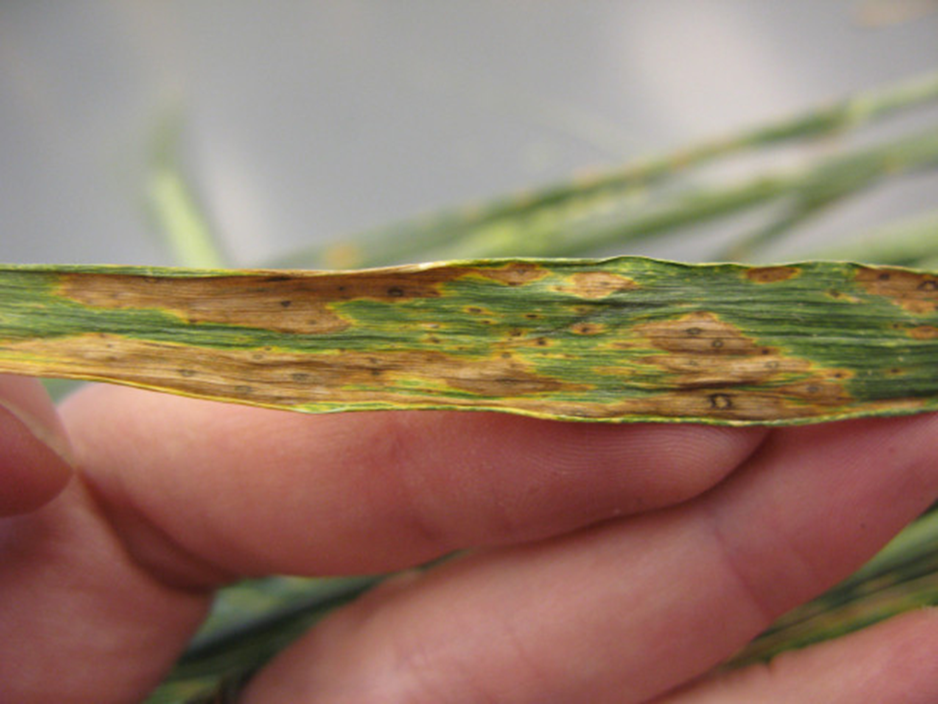
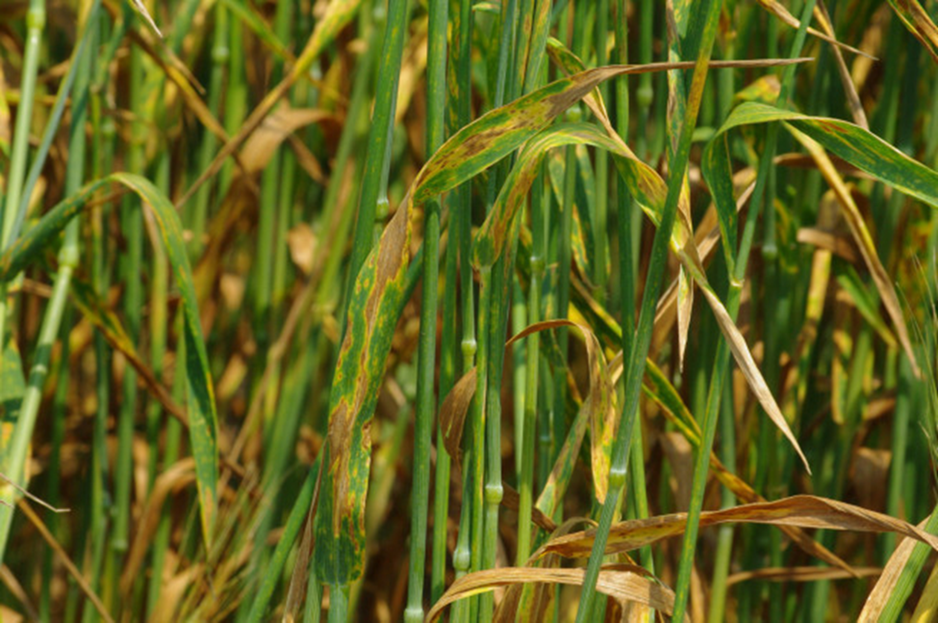
When soil dries out the manganese in the soil changes to a plant unavailable manganese oxide. Research shows if you have visible Mn deficiency you will need more than one application. IF the soil dries out in wheat fields YOU MIGHT see Mn deficiency. It will appear on soils with more air such as light soils or high organic matter soils. The symptoms are a light green similar to sulphur or nitrogen deficiency. As it progresses you get visible specking. (In oats it is called grey speck) Notice the specking on some green leaves on the wheat picture on the left. Picture on the right is from the internet on Grey Speck of oats.
Wheat Staging – Understanding Greek…(JZ)
When I was first exposed to wheat staging, I had a tough time trying to understand what the various terms/numbers meant. After working with it for a while, especially the Zadok’s system, it is intuitive what the various stages mean. Zadok’s is a decimal system. The first decimal is the overall stage, with the 2nd number defining where you are within that stage. For example, the 00’s are germination, 10’s are the first leaves. The 20’s are the tillers. The 30’s are the nodes/flag leaf. The 40’s are booting, with the 50’s head emergence, the 60’s flowering, 70’s milk development, 80’s dough, and finally the 90’s for ripening.

Septoria Leaf Spot (aka Septoria tritici blotch) (JZ)
Septoria is a common wheat disease and often presents itself with other leaf diseases. There are three big leaf diseases in Ontario, and if this one is not in first place, it is in second.
Septoria Leaf Spot is caused by Zymoseptoria tritici. The lesions are elliptical in shape and tan-brown in colour and will have yellow halos when first appearing on seedling leaves. The centre of the lesion usually dies, forming dark fruiting bodies which give it a speckled look. Lesions will spread on the same leaf (following leaf veins) from the fruiting bodies when the conditions are suitable i.e. rain or dew.
The fungus that causes this disease overwinters on seed, residue and other overwintering cereals. Cool, wet weather favours infection. If the weather is cool, wet and rainy, the disease will continue to go through infection cycles.
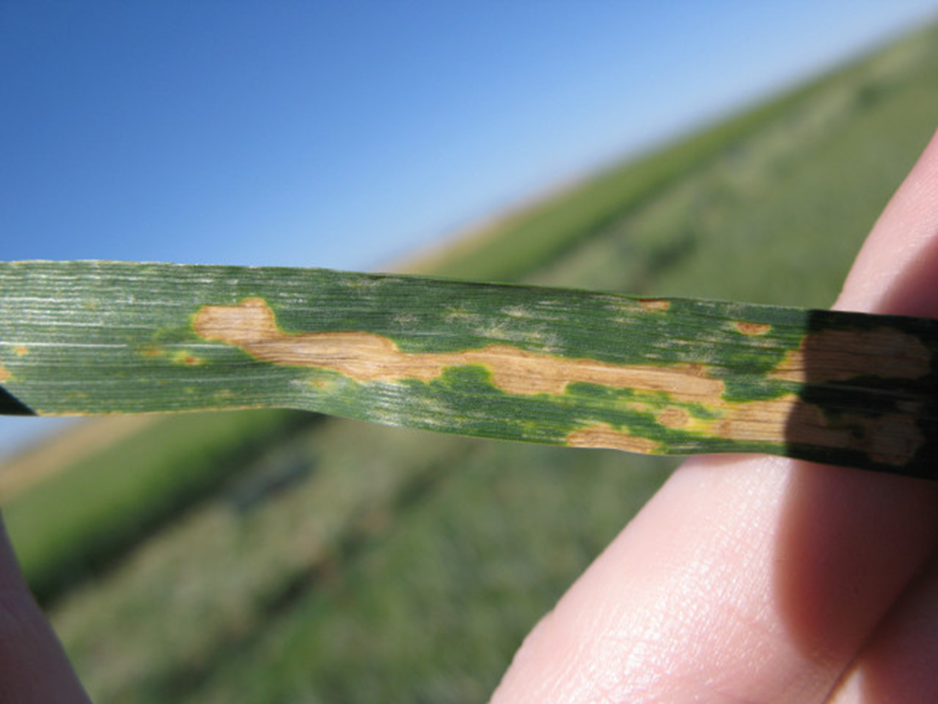
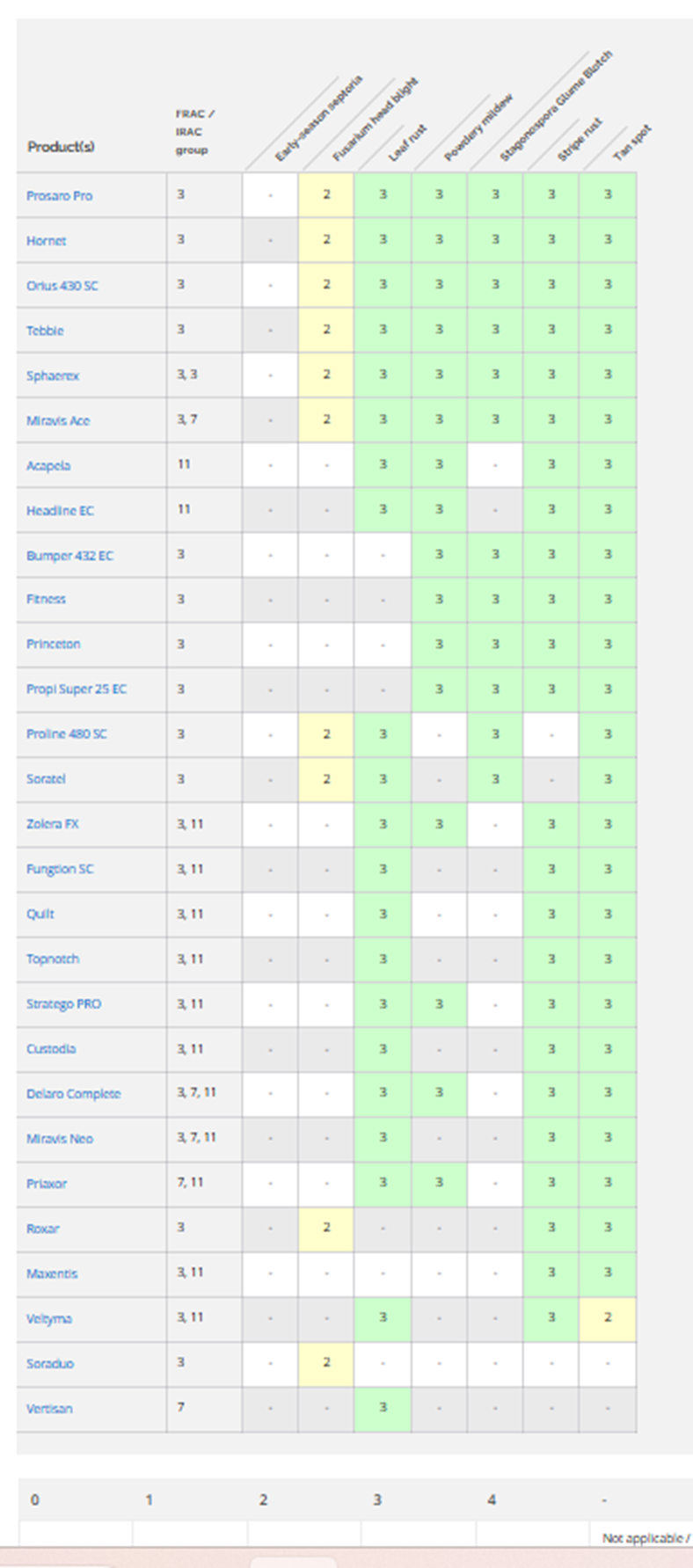
Almost all fungicides listed on the Crop Protection Network website and the OMAFA crop protection hub are listed as VG for controlling this disease, so if you are using a foliar fungicide when the conditions are conducive, you should be okay.
How much N should I be putting on my winter barley? (JZ)
Generally, I’ve been treating it like soft red winter wheat if the population and management are there to support the N rates (i.e. it has the potential for average to above average yields and it has two passes of fungicides). So about 120 units of N/ac plus 20-25 lbs./ac of Sulphur.
Weed Control
Controlling Chickweed (PJL & JZ)
Chickweed is growing in wheat and no-till bean fields; it keeps getting worse every year it is not controlled. It germinates from late summer until late spring. It thrives in Roundup Ready soybean crops if there is no residual herbicide to control late season germinators. It attracts and harbours insects (cutworms) allowing no-till fields to be hosts to these pests. The cutworm adults fly in each spring and look for lush growth to lay their eggs. Chickweed is a candidate for egg laying. If you control chickweed with an herbicide and then work those areas a couple of weeks before you plant corn, the moths will lay their eggs in someone else’s field where it is not controlled. Chickweed is an alternate host for SCN. It is easily controlled with low rates of Glyphosate in a burndown. In winter wheat, Boost M Refine SG, Refine M, Peak 75 WG plus Pardner, Barricade M all are rated as giving 95% control. Products containing fluroxypyr are usually rated as suppression for this weed. Once chickweed starts to flower, it has caused maximum yield loss to the crop. Controlling flowering chickweed is just to reduce the seed bank, it does not increase yield.
Q How much nitrogen should I apply to my winter triticale? (PJL)
From Tom Francis Kilcer
“Winter forage is more than just yield. The nutrients it contains are critical for economic dairy forage. In this study, we found at the 0 lbs. spring nitrogen rate we had 9% crude protein. Where we put 120 lbs. of nitrogen (plus sulfur) we got 19% crude protein.”
If you planted early and had a good stand going into winter you should be applying 90-120 actual N now. Applying up to 90 lbs. N is for yield. The next 30 or more pounds N adds yield and protein. You also need at least 20 lbs. actual sulphur. If you applied manure before planting some of the nitrogen in that manure may be available. But some of Kilcer’s research shows it is not always there. Consider not crediting manure for more than 20 pounds actual N. The rest of the manure nitrogen will be available later in the season, this is not research but extrapolation by me.
Spring Cereals Seeding Recommendations (JZ)
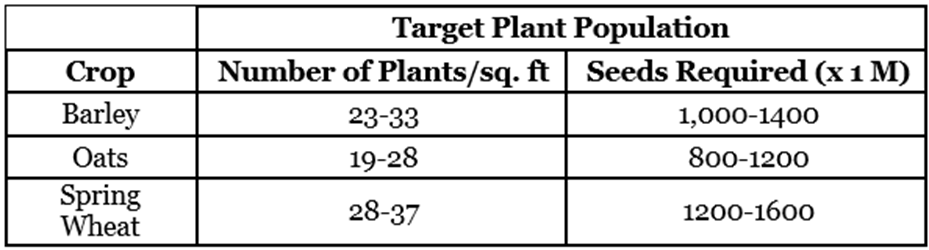
1)Adjust based upon crop species (see chart below)
2)Ensure you adjust for differences in thousand kernel weight (TKW). The supplier should be able to provide you with TKW or seeds/lb. This is important as you can have a 20% difference in weight to get the same number of seeds/ac in the ground. Some years this range is much wider.
3) Adjust based upon soil type (plant mortality). Clay soils should be planted at the higher end of the range.
Forages
Q - Can I under seed alfalfa into winter wheat? (PJL)
A - NO! I know this is being suggested. But it doesn’t work. You end up with a poor stand that you wonder about keeping or destroying. Either way you lose. I have seen it tried many times, but never successfully. You can under seed winter wheat with red clover, or seed alfalfa after wheat harvest. Crop Insurance will not insure alfalfa under-seeded to winter wheat.
Fertility
Ammonium Sulphate vs. Ammonium Thiosulphate (JZ)
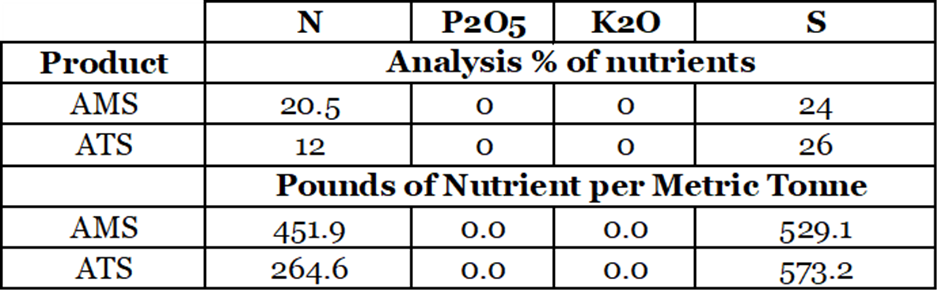
Ammonium Sulphate (solid) has sulphur 100% in the sulphate form, the water-soluble form plants can readily uptake into the plant. Ammonium Thiosulphate (ATS) (liquid) is comprised of a few different forms of sulphur, mainly in the elemental form. Sulphur in the elemental form is not readily available, and as result needs to be mineralized by soil bacteria into the sulphate form. This is reaction is primarily driven by soil temperature and moisture.
Thiosulphate behaves a bit different than Tiger 85 or 90 (elemental sulphur with a bentonite clay carrier), mainly because it has a much bigger surface area for the bacteria to attach the sulphur and convert it to the sulphate form vs. that in a prill encased in bentonite.
I use a lot of ATS on wheat, but I also have my clients using MESZ in the fall, so we tend not to see any S deficiency in the spring using that sulphur source when layering sulphur in multiple apps. Once the soil surface is at 8-10 C, ATS will convert to sulphate sulphur within 7-10 days for the wheat to take it up.
I do see people shorting themselves sometimes using ATS on wheat (or even sometimes spring cereals) if they have no fall sulphur or only use sulphur in the wheat part of their rotation. It is too slow when we have cool growing conditions (especially when used at low rates) and in those cases I would rather they use granular AMS and then come back with straight UAN. So, what would I do if I needed to add ATS to my liquid UAN on wheat and did not want to have issues with slow sulphur uptake? I’d use 7-10 gallons/ac of ATS on my first pass and skip trying to add it to my 2nd pass. Doing this is cheaper than making a separate pass with Ammonium Sulphate in most situations and avoids the issue of having to rent or use a dry fertilizer spreader if you do not have one.
What about liquid ammonium sulphate (8-0-0-9S)? Usually, it is a very expensive way of buying sulphur. Just up your rate of ATS if worried about availability or make two trips.
How do I figure out how much the sulphur costs per pound on AMS vs ATS?
You need to back out the amount of nitrogen in the material.
Let’s assume you have 1 Metric Tonne of both the AMS (dry) and the ATS (liquid).
First, figure out how many pounds of N and S are in each metric tonne. Multiple the analysis for those two values.
Then multiple the cost of the nitrogen on a per pound basis for each of these materials. Back out this value off the purchase price for each of these products. What is left is the cost of the sulphur in each of these products. Divide the cost that is left by the number of pounds of sulphur in each of these products. That will give you the cost per pound of sulphur for each of these materials.

Equipment
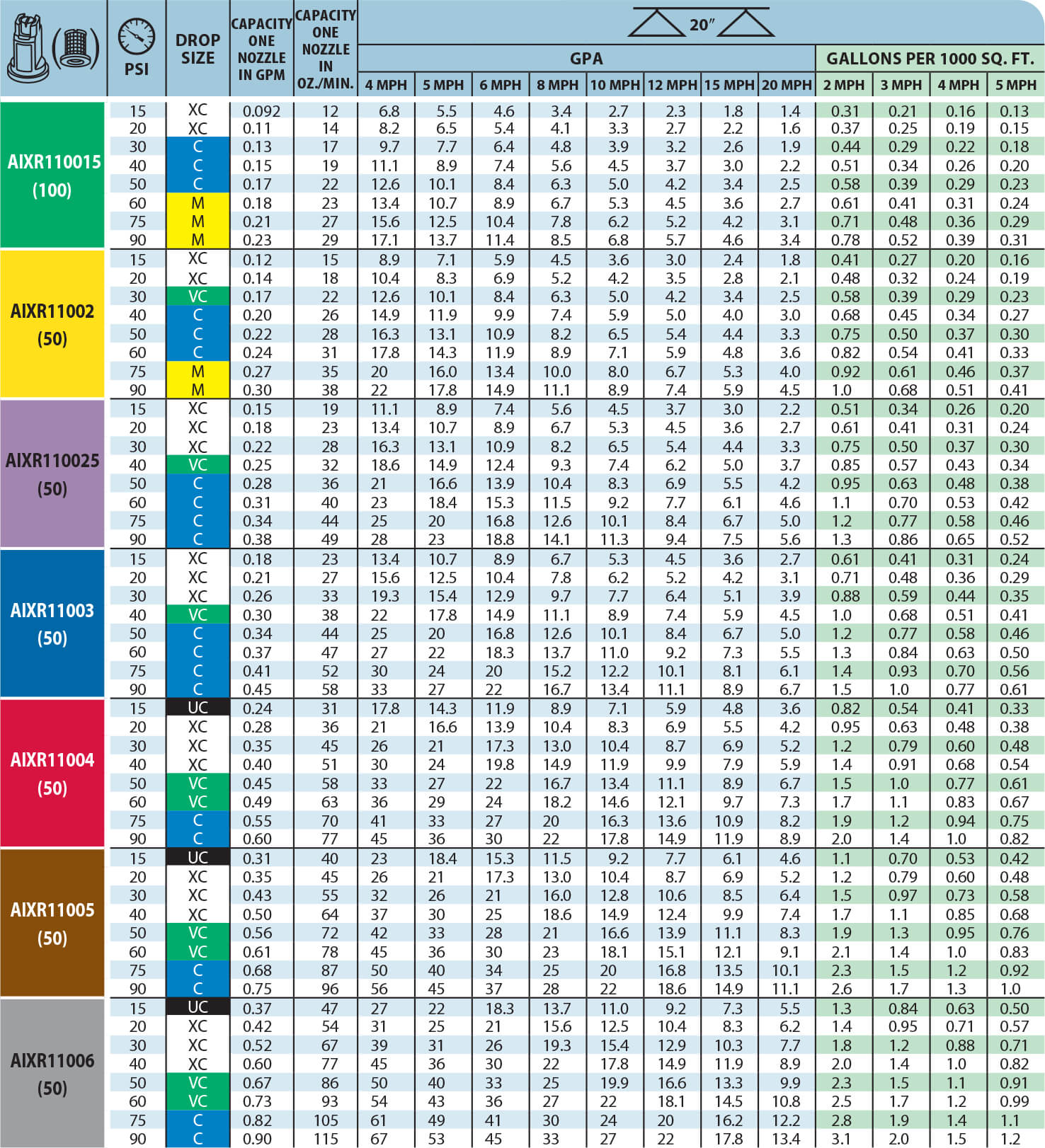
Selecting a sprayer nozzle (non-PMW sprayers) (JZ)
1. Figure out what style of nozzle you require for the application i.e., flat fan, AI, twin fan, streamer etc., and spray angle or nozzle pattern based on spacing (10, 15 or 20”).
2. Figure out typical ground speed, water volume (range in volume), droplet size required would be typical.
3. Look at nozzle chart and select a nozzle size that would fit the application outlined above. If using the nozzle for a rate range (i.e., variable rate) or multiple types of products, consider a VR capable nozzle or look at one that can handle a rate range without sacrificing droplet size too much.
4. The nozzle size number is how many gallons a nozzle will put out per minute at 40 PSI. This is standard across the industry. If you are running a 04 nozzle, it will put out 0.4 gpm at 40 PSI. The higher the PSI you need to run to hit your target water volume, the smaller your droplet size will be.
What sprayer droplet size do I require? (JZ)
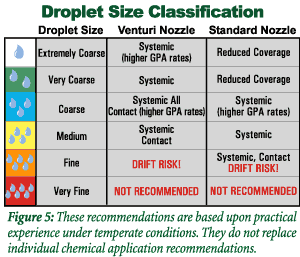
Contact products (glufosinate/conventional soybean post herbicide, micronutrients, fungicides) typically looking for fine to coarse droplet size, I’d lean more towards coarse to reduce risk of drift and consider increasing water volume instead to get better coverage. Sprayers101.com also suggests NOT increasing sprayer tip pressure to get better velocity and rather increasing water volume to get better canopy penetration.
For soil applied products (PPI, pre-emerge herbicides), extra coarse or higher droplet size can be fine, essentially you could go to larger droplets to reduce drift provided the herbicide is still effective if adding a contact product like glyphosate as part of a burndown.
For dicamba based products applied in crop, both Bayer and BASF suggest used an Extremely Coarse to Ultra Coarse droplet size.
For Enlist based chemistry, Corteva suggests using a coarse to extremely coarse droplet size.
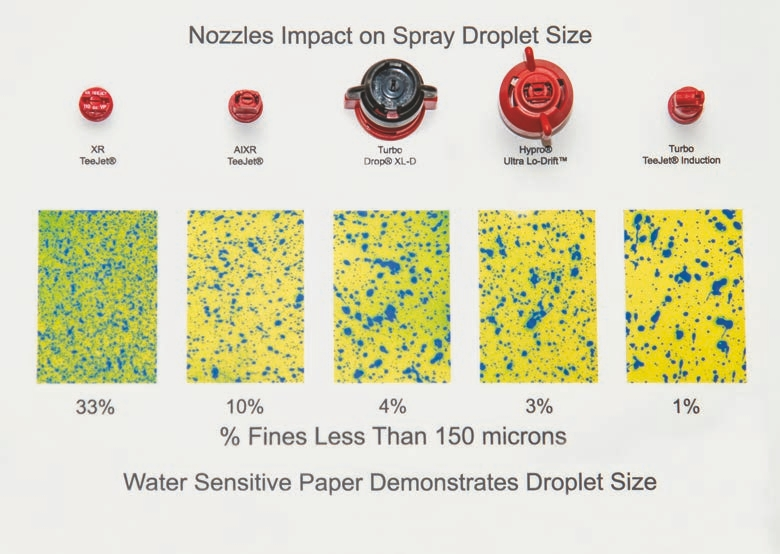
When it comes nozzles, essentially you will need the following.
Streamer if doing N on wheat, my preference is Chafer Bars, followed by 5 hole for 20" spacing and 3 hole for 15" spacing. 7-hole can result in too much leaf burn at later stages.
Wheat herbicides/PGR/fungicide + anything post emerge systemic at 20 gallons - AI style nozzle with coarse droplets.
Forward/backward style nozzle for FHB in wheat application. Need a different angle to hit a vertical object, some use this nozzle for other passes as well i.e. preharvest in soybeans.
Burndowns + glyphosate in-crop at 10 gallons - AI style nozzles with coarse or use one that also works for dicamba/Enlist. To get good coverage with those herbicide like dicamba or enlist at larger droplet size, you will likely have to increase water volume.
Post-emerge contact herbicides for IP soybeans/Edibles/Liberty - usually use a Extended Range Flat Fan with medium to coarse droplets at 20 gallons/ac.
28% broadcast with or without pre-emerge herbicide - can use a stainless broadcast style type for higher volume applications.
If you can make a habit of winning, then you don't have to turn it up a notch.
-Carlos Delgado